

Batteries

Batteries

The one material
for batteries

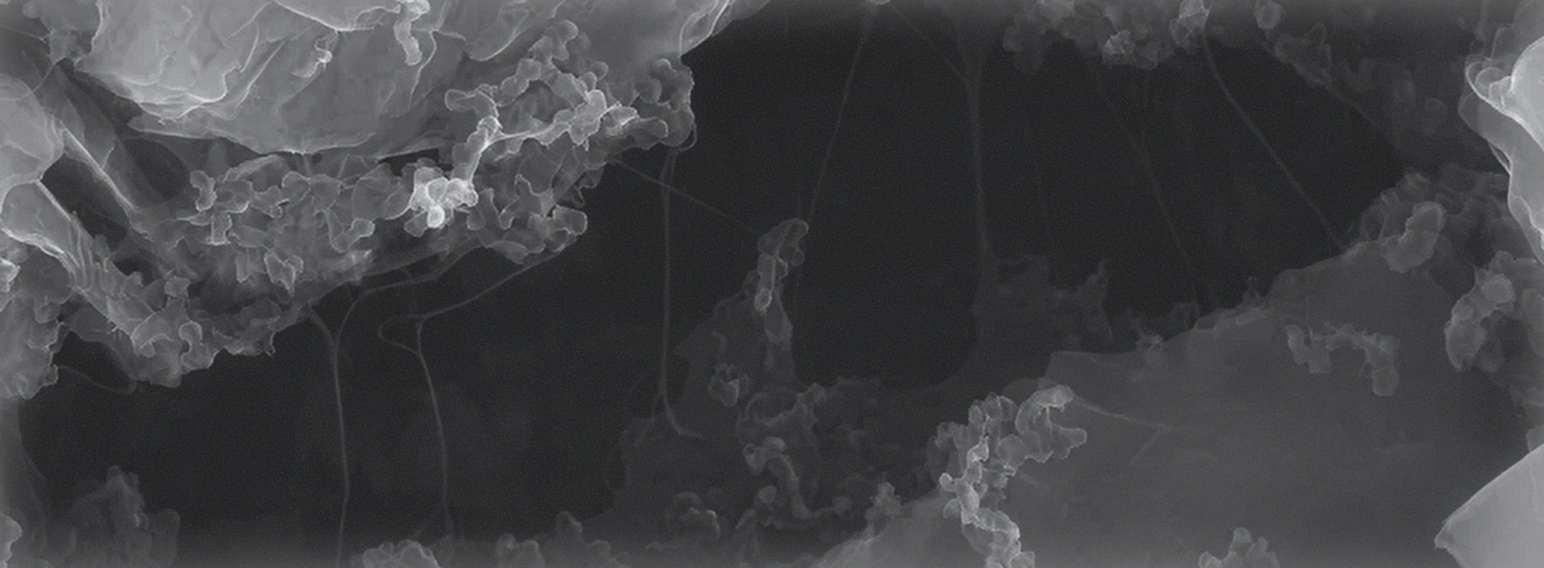
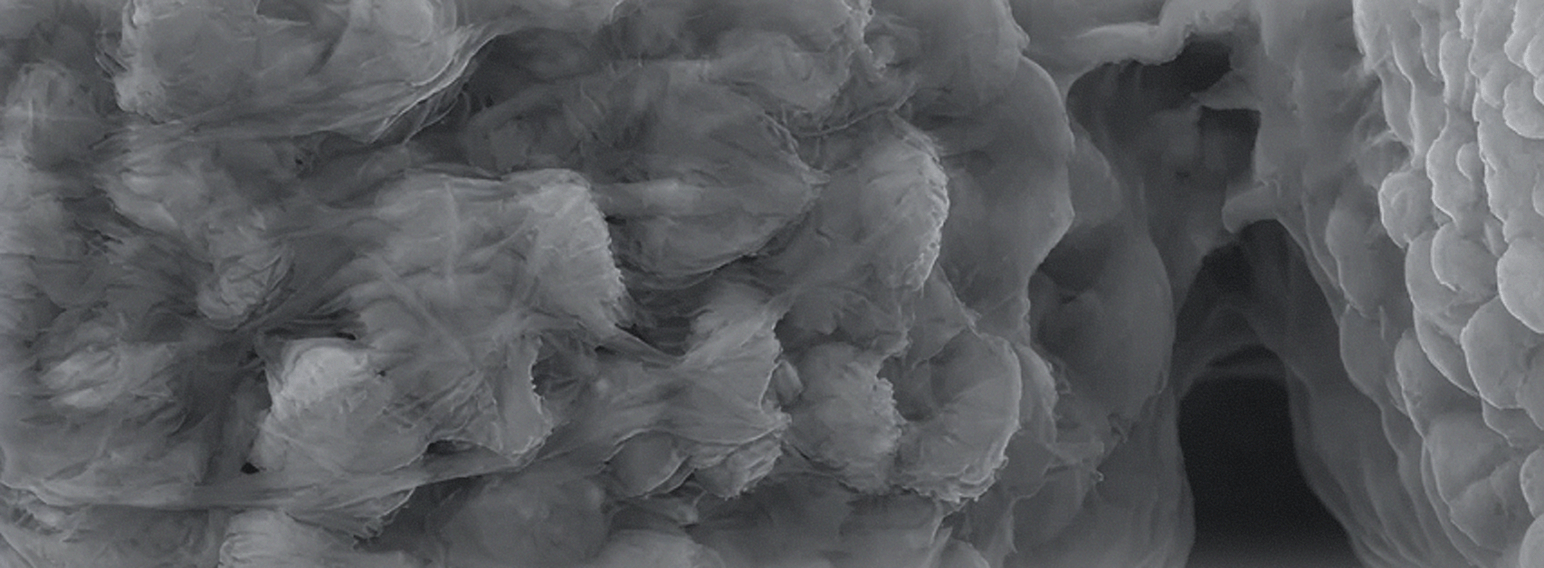
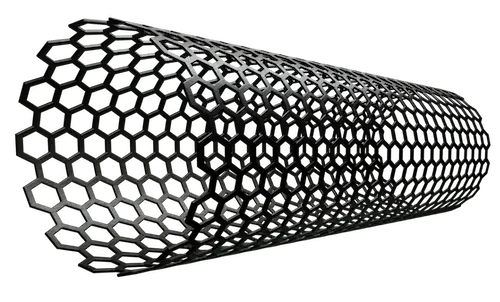
TUBALL single wall carbon nanotubes (SWCNTs) stand out among conductive agents for batteries for their exceptional intrinsic properties, being nature’s longest and most flexible material for conductivity and reinforcement of electrodes.


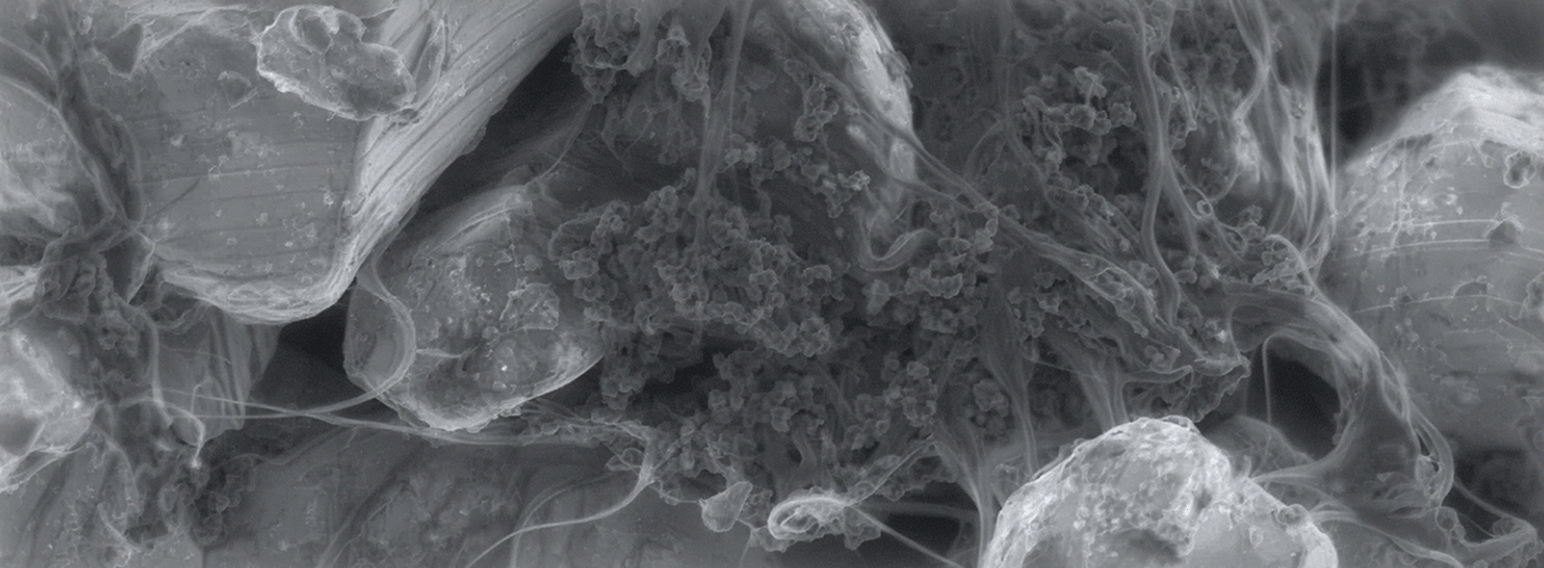
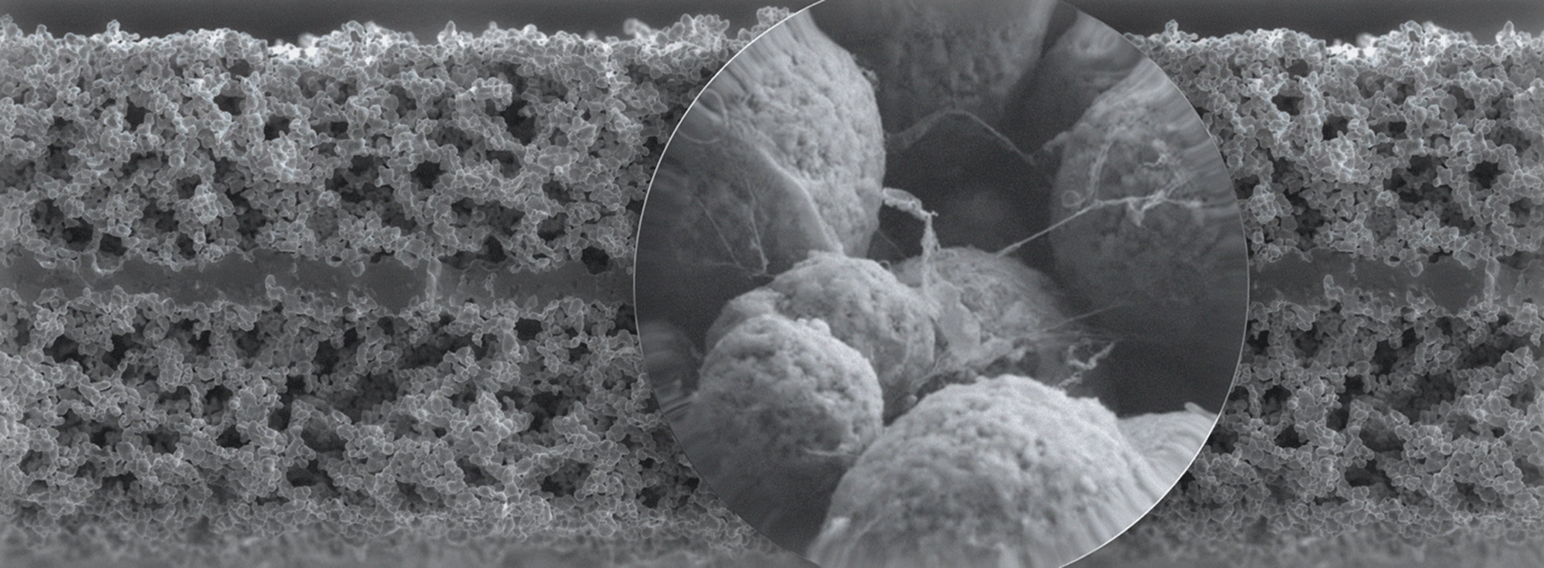
TUBALL™ networks form robust electrode connections, which are essential for the performance of all key battery chemistries.


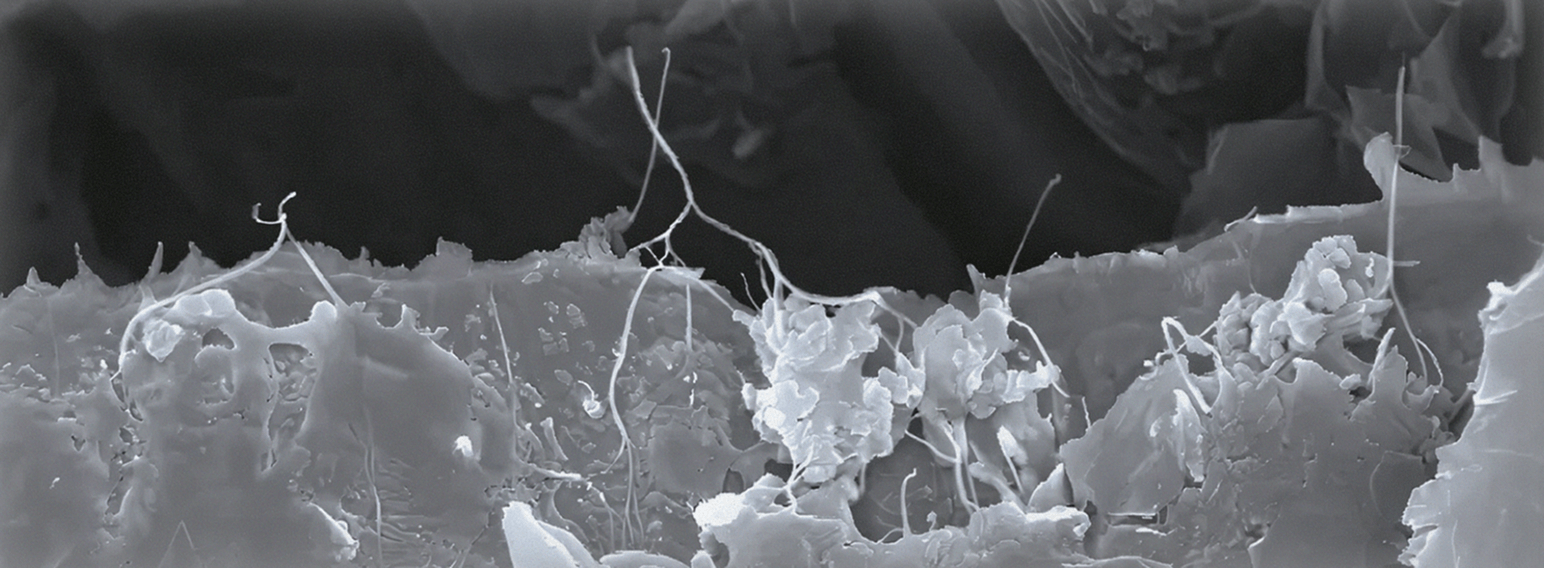
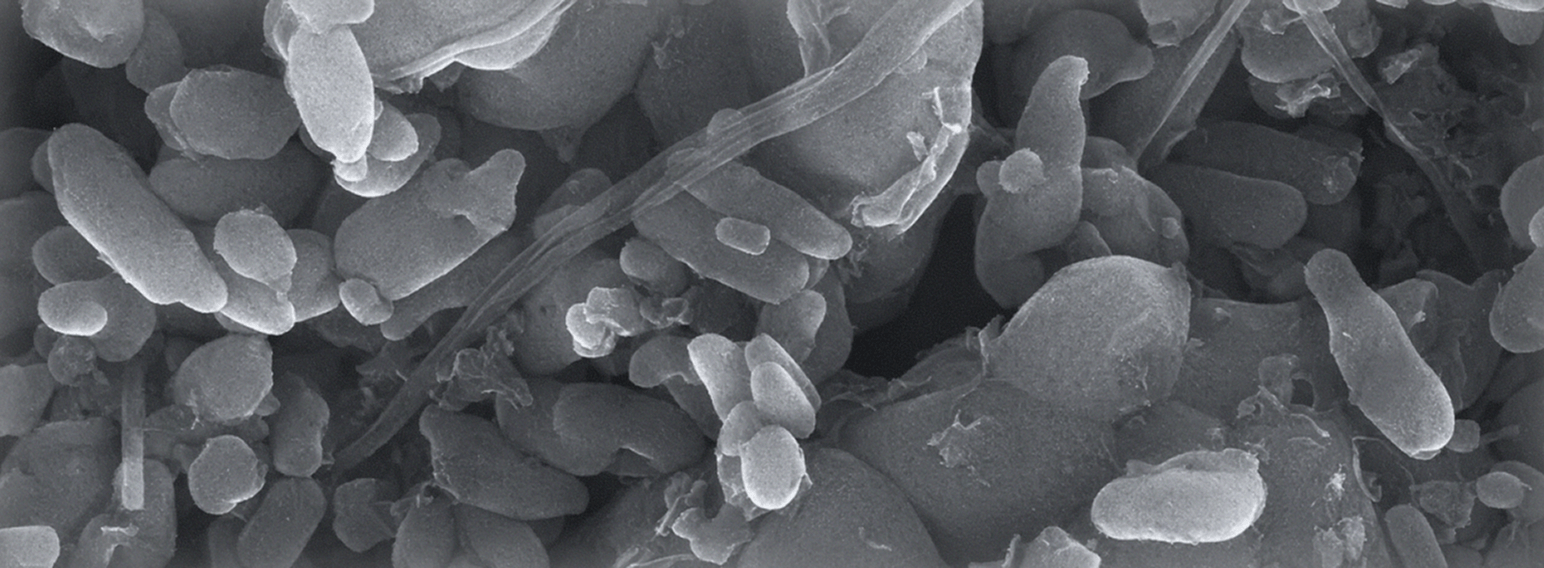
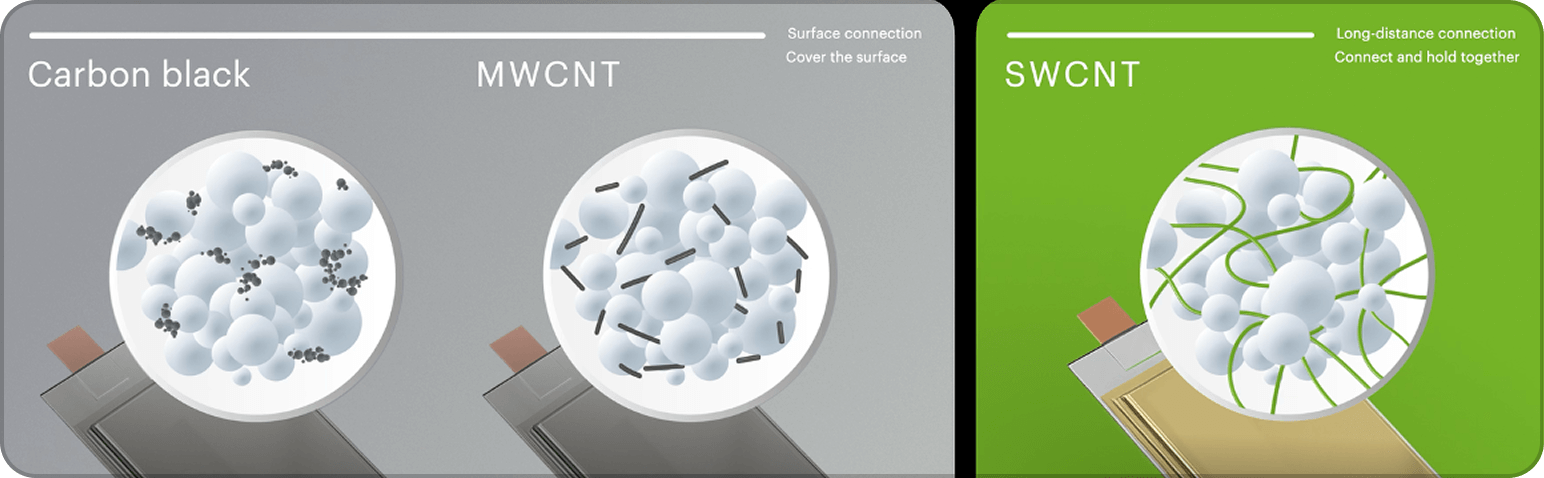
Nanotube’s unique properties result in different behavior in electrodes. While multi wall carbon nanotubes and carbon black provide only surface connections with short-distance conductivity—resulting in higher electrode bulk resistance and unstable connections—single wall carbon nanotubes create robust, long-distance connections that are stable despite active material volume expansion during long-term cycling.


SWCNTs for higher flexibility, less spring-back, and reduced swelling of electrodes

The ability of single wall carbon nanotubes to connect electrode particles over long distances provides flexibility, as well as mechanical and electrical benefits, to both cathodes and anodes.


As a result, compared to electrodes with multi wall carbon nanotubes, those incorporating single wall carbon nanotubes demonstrate reduced spring-back after calendering, higher flexibility, lower electrode swelling after cycling, and more uniform conductivity.

Do you have questions or ideas for new applications of graphene nanotubes?

  • ANODES
    Silicon

    Only single wall carbon nanotubes are able to guarantee robust electrical connections between active material particles despite severe silicon-based anode volume expansion during cycling, thus drastically mitigating silicon anode degradation. The more silicon in the anode, the more essential the use of SWCNTs in the design becomes.

    Read more
  • ANODES
    Fast-charging graphite

    Graphite anodes need to be thin and highly electrically and thermally conductive in order to charge quickly. But thin electrodes reduce the energy density of the battery. TUBALL™ reduces anode swelling after cycling and spring-back after calendering, increasing battery energy density.

    ANODES <br/>Fast-charging graphite
  • CATHODES
    Single-crystal NCM

    TUBALL™ nanotubes work at ultralow concentrations, allowing Li-ion battery makers to maintain overall low dosage of conductive additives in single-crystal NCM, increasing cell energy density.

    CATHODES <br/>Single-crystal NCM
  • CATHODES
    LFP cathodes

    Robust TUBALL™ networks improve cohesion between electrode particles, increasing the durability and flexibility of the electrodes, allowing battery makers to design L(M)FP cells with record-high active material loadings.

    CATHODES <br/>LFP cathodes
  • CATHODES
    High-nickel

    The addition of TUBALL™ SWCNTs enhances the electrical conductivity and structural integrity of high-nickel cathodes. This improvement enables lower battery DCRm, which results in higher safety.

    CATHODES <br/>High-nickel
  • New battery technologies

    Unique robust TUBALL™ networks provide flexibility, mechanical reinforcement, and exceptional conductivity to battery electrodes regardless of their chemistry. This is why TUBALL™ is an essential part of both today’s and tomorrow’s battery cell chemistries. As an example, in dry battery electrodes, TUBALL™ + PTFE composite unlocks stable, high-conductivity performance, while in semi-solid and solid-state batteries, TUBALL™ enables thick-electrode designs with superior ion–electron balance—delivering higher energy, longer life, and greater efficiency.

    New battery technologies

Welcome more joint R&D projects in this field

Media on graphene nanotubes Batteries

  • Scientific validation

    Li-ion batteries
    Li-ion batteries

    Investigating operating protocols to extend the lifespan of silicon anodes in Li-ion batteries

    Silicon anodes containing a small amount of SWCNTs (0.5 wt%) show much better stability when operated at a high state of charge, because in this regime they maintain lower impedance and degrade more slowly. The study reveals that carefully choosing the voltage window and lithiation/delithiation depth — together with the presence of SWCNTs in the electrode — can dramatically extend the cycle life of silicon anodes.


    Objavljeno:
    Li-ion batteries
    Li-ion batteries

    Investigation of Expansion and Potential of Si-dominant Anodes with Binder Modification in Full Cells

    They examine how Si–PAA anodes reinforced with a small amount of SWCNTs behave under different voltage windows, focusing on how much the electrode expands and how quickly it degrades. When the silicon is cycled in a milder voltage range—meaning less Si is actually lithiated each cycle—the Si/SWCNT/PAA structure remains far more mechanically stable, leading to over five-fold longer cycle life despite reduced usable capacity.


    Objavljeno:
    Li-ion batteries
    Li-ion batteries

    Unraveling the impact of CNT on electrode expansion in silicon-based lithium-ion batteries

    CNTs mechanically restrain silicon, slow crack growth, and suppress excessive SEI buildup, which dramatically reduces electrode swelling even under high-density, industrial conditions. Because CNTs maintain electrical pathways and prevent particle pulverization far better than carbon black, Si–graphite anodes with CNTs deliver much stronger cycling stability, improved fast-charge performance, and superior low-temperature behavior in full 1 Ah pouch cells.


    Objavljeno:
    Li-ion batteries
    Li-ion batteries

    Characterizing Structure and Electrochemical Properties of Advanced Si/C Anode Materials

    This paper dissects commercial Si/C composites where sub-nanometer silicon clusters are tightly confined inside a highly microporous carbon matrix, delivering ~2000 mAh g⁻¹ with graphite-like tap density (~1 g cm⁻³) and far less stack swelling than you’d expect from 300% Si expansion. By combining detailed nanostructural analysis (Debye XRD, TEM, BET) with operando stack-pressure measurements in pouch cells, it shows how this confinement suppresses cracking and irreversible stack growth, making high-Si anodes behave like something you could actually commercialize.


    Objavljeno:
    Li-ion batteries
    Li-ion batteries

    Optimization of Si-containing and SiO based Anodes with Single-Walled Carbon Nanotubes for High Energy Density Applications

    SWCNTs keep Si and SiO particles electrically connected as they expand and contract, preventing isolation and early capacity loss. Even tiny amounts of nanotubes strengthen the electrode enough that simple CMC/SBR binders work well, and high-loading Si/graphite composites cycle far more stably. Their mechanical flexibility and long, web-like structure make SWCNTs the key element that stabilizes these high-energy anodes.


    Objavljeno:
    Li-ion batteries
    Li-ion batteries

    Investigation of The Failure Mechanisms of Li-Ion Pouch Cells with Si/Graphite Composite Negative Electrodes and Single Wall Carbon Nanotube Conducting Additive

    SWCNTs act as the electrical “glue” that keeps Si/graphite composite anodes connected even as the silicon repeatedly expands and contracts. In these pouch-cell tests, the nanotubes prevent active-mass loss and keep the anode structurally coherent, so the main failure mode is no longer particle isolation—but steady lithium loss into a continually growing SEI. In other words, SWCNTs successfully stabilize the electrode; the remaining degradation comes from electrolyte-driven SEI growth, not from the anode falling apart.


    Objavljeno:

    Related video

    • Produce anti-static powder coatings in 2.5 months without changing processing