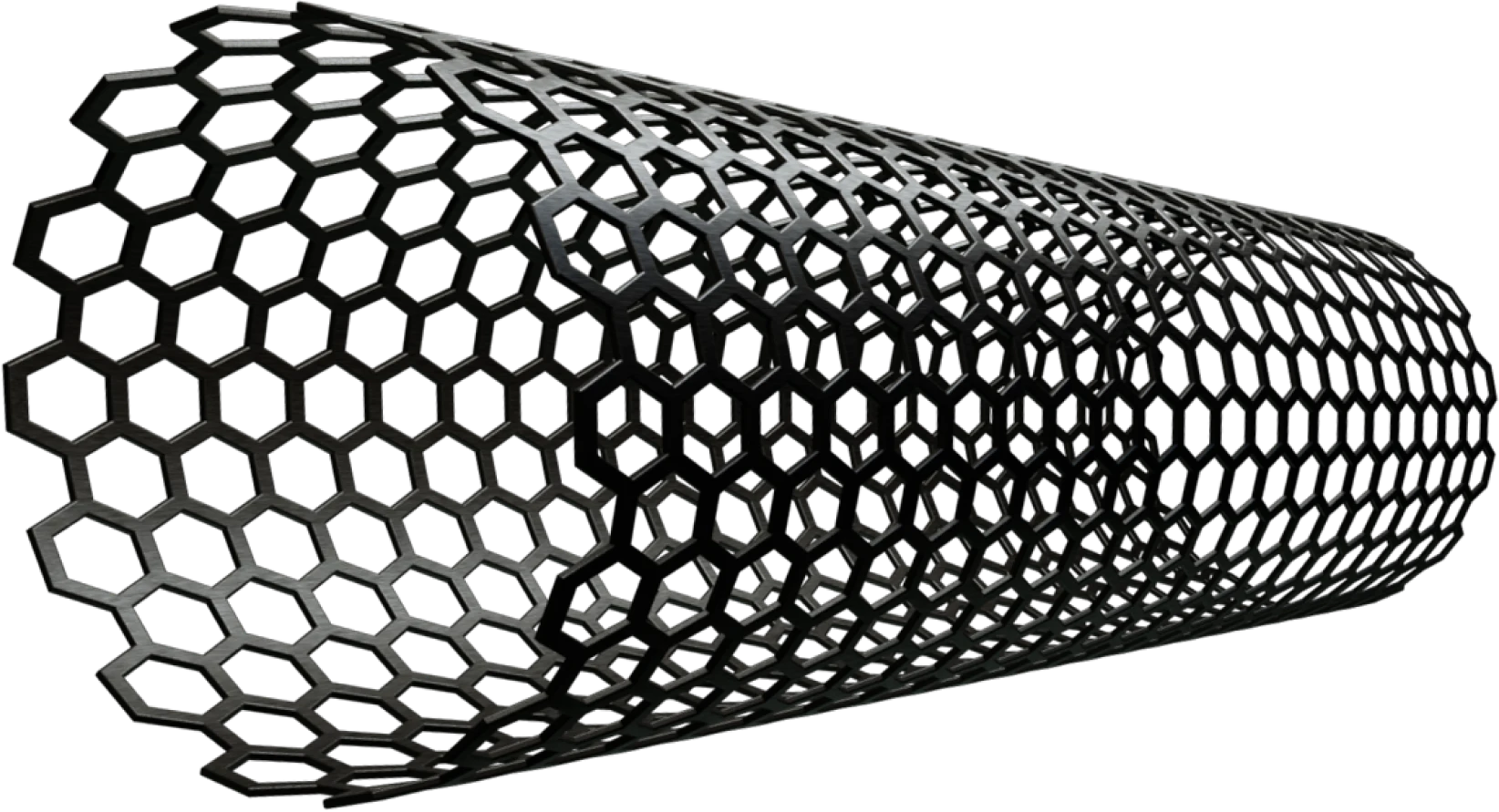
TUBALL™ single wall carbon nanotubes enable lower expansion of graphite anodes after cycling, eliminating the need to include extra volume-increase buffers in cell design.
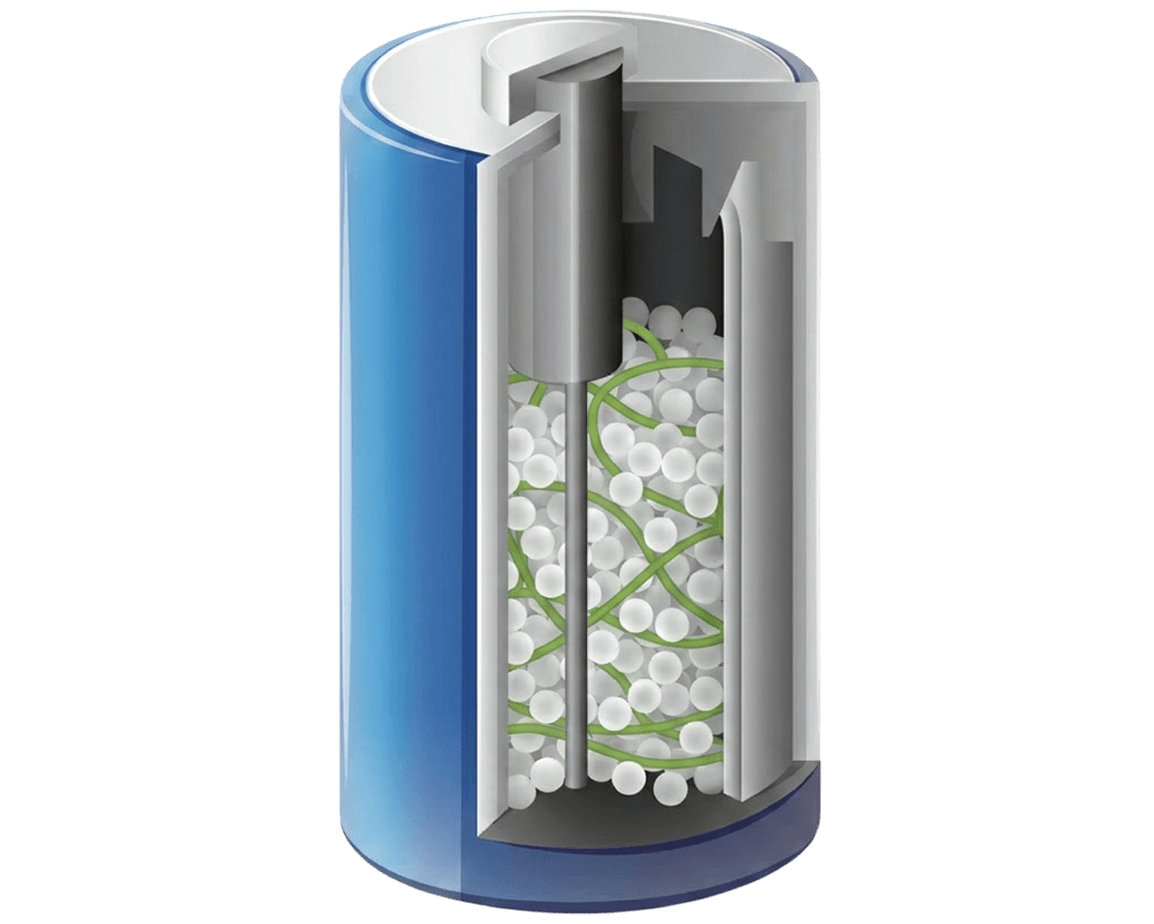





The ability of single wall carbon nanotubes (SWCNTs) to connect electrode particles over long distances provides flexibility, as well as mechanical and electrical benefits, to graphite anodes.

When SWCNTs are incorporated into graphite electrodes, they create a continuous network of highly conductive nanotube pathways that bridge the gaps between individual graphite particles.
This interconnected structure ensures that electrons can travel through the anode with far less resistance, enabling faster charge transport, more uniform current distribution, and improved stability during aggressive fast-charging conditions.

The SWCNT network helps distribute mechanical stress more evenly during fast charging, preventing particle cracking and keeping the electrode structure significantly more stable over long-term cycling.

SWCNTs help the anode manage heat more effectively by reducing the amount of energy that gets trapped inside the electrode during fast charging. Their intrinsic thermal conductivity allows excess heat to be drawn away from the most active regions of the anode and spread out before it can build up.
Improved heat dissipation prevents sharp temperature spikes, keeps the electrode operating in a safer and more controlled thermal window, and slows down the reactions that normally accelerate aging of the battery at elevated temperatures.


TUBALL™ BATT H20 is a plug-and-play solution designed for seamless integration into existing lithium-ion battery production lines. It comes as a stable, water-based concentrate compatible with standard slurry mixing, coating, and drying processes — no special equipment or process changes needed. Battery manufacturers can easily upgrade to high-silicon anodes and achieve energy density targets without disrupting current workflows. This makes it a practical, low-risk path to next- generation battery performance.
Contact us for product processing guidelines and additional technical documentation

Water dispersion of single wall carbon nanotubes with the addition of dispersing agent. Used as a conductive additive for lithium-ion batteries.
Graphite anode recipe is redesigned by replacing 22 wt.% of graphite with SiOx and then carefully rebalancing carbon black, CMC and SBR, finally swapping a small part of carbon black for just 0.1 wt.% SWCNT to build a stronger, more conductive network. With this optimized SiOx/graphite + SWCNT anode they scale up to 1 Ah NMC811//SiOx-graphite pouch cells and show that electrolyte choice, especially FEC content, becomes the main lever: low-additive electrolytes give better rate capability, while a high-FEC electrolyte extends life to ~368 cycles above 80% SOH compared to ~250 cycles for the baseline
SiOx wrapped in 3D carbon layers keeps its capacity far better because the carbon shell absorbs the violent volume swings, protects the surface, and maintains fast electron/Li⁺ pathways. Compared to standard SiOx–C, this 3D-carbon SiOx stays mechanically intact, shows much higher initial efficiency, and preserves its capacity over long cycling—making it a genuinely practical option for commercial SiOx–graphite anodes.
SWCNTs keep the Si in the Si/C–graphite anode fully electrically active during cycling, removing Si-inactivation as a degradation pathway and leaving reversible lithium-inventory loss as the only cause of fading. With VGCF, part of the capacity loss still comes from Si becoming electrically isolated, showing a clear difference in how the two additives shape the internal degradation behavior even though the full cells end up with similar long-term retention.
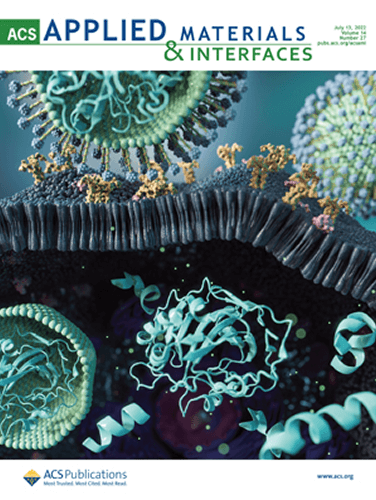
SWCNTs form a much more durable electron-conduction network in SiO/graphite anodes than carbon black. With artifact-free C-AFM imaging, it becomes clear that SWCNT electrodes maintain strong current pathways and resist particle damage during cycling, while carbon-black electrodes lose connectivity as cracks and SEI growth break the network.