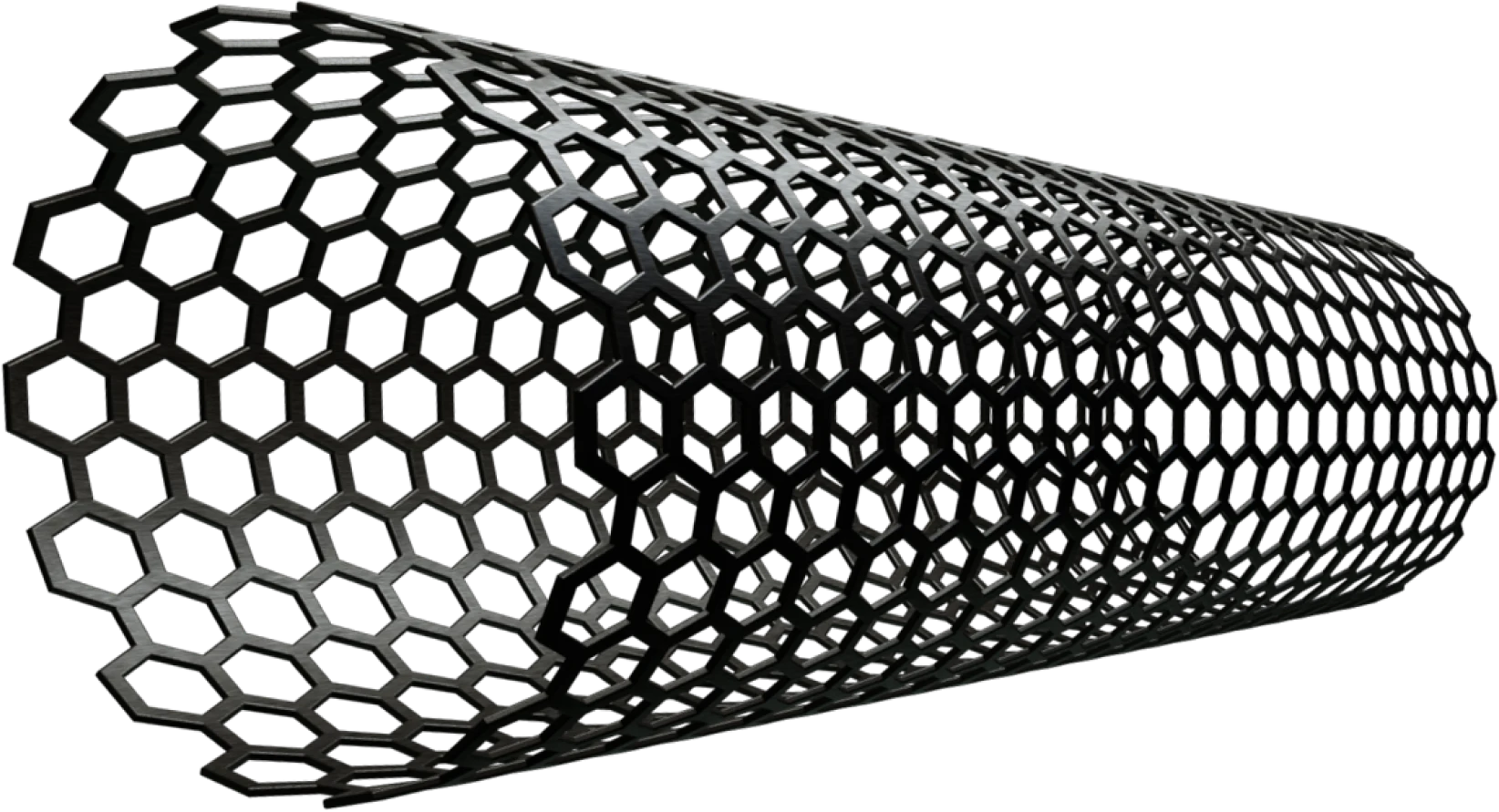
Graphene nanotubes enhance fiberglass-reinforced composites by providing reliable electrical conductivity in compliance with industrial standards throughout their entire service life. These advanced filament-wound composites are ideal for manufacturing pipes and tanks used in the storage and transportation of hazardous materials, significantly improving operational safety.
Effective at ultralow loadings and compatible with key production technologies, graphene nanotubes preserve the mechanical performance of the composite and are easy to process and integrate into existing manufacturing workflows, significantly expanding the application envelope of fiberglass-reinforced composites. In addition, their use enables a cleaner, dust-free production environment and improves overall cost efficiency.
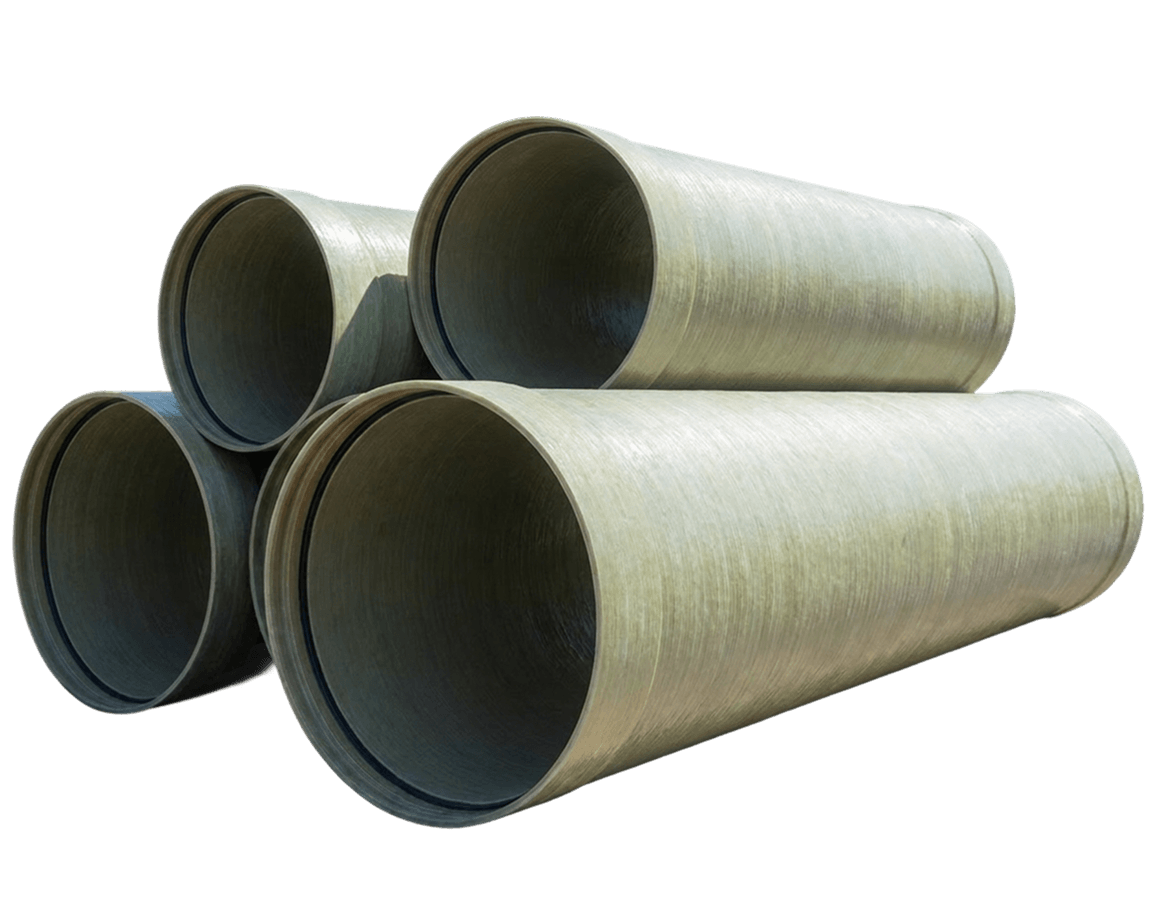





Pipelines and tanks used in chemical, oil & gas, petroleum, and industrial storage applications must comply with international standards including ISO 14692, ISO 15649, UL 1316, API RP 15HR / API RP 15LR, EN 13121, and NFPA 77. Fiberglass-reinforced composite materials are widely used for pipelines and tanks due to their corrosion resistance, light weight, and long service life. But during fluid flow, filling, and draining, electrostatic charges can accumulate and must be safely dissipated to prevent sparks and ignition, especially when handling flammable or explosive media. To effectively control static electricity, the inherently insulating composites must be engineered with conductive or anti-static properties to ensure safe operation without compromising mechanical performance.

TUBALL™ graphene nanotubes, at loadings starting from 0.01 wt.%, provide homogeneous and permanent electrical conductivity throughout the entire composite pipe or tank. In contrast, carbon rovings and veils create heterogeneous conductivity, which can lead to reliability issues and installation challenges in composite piping and tank systems.
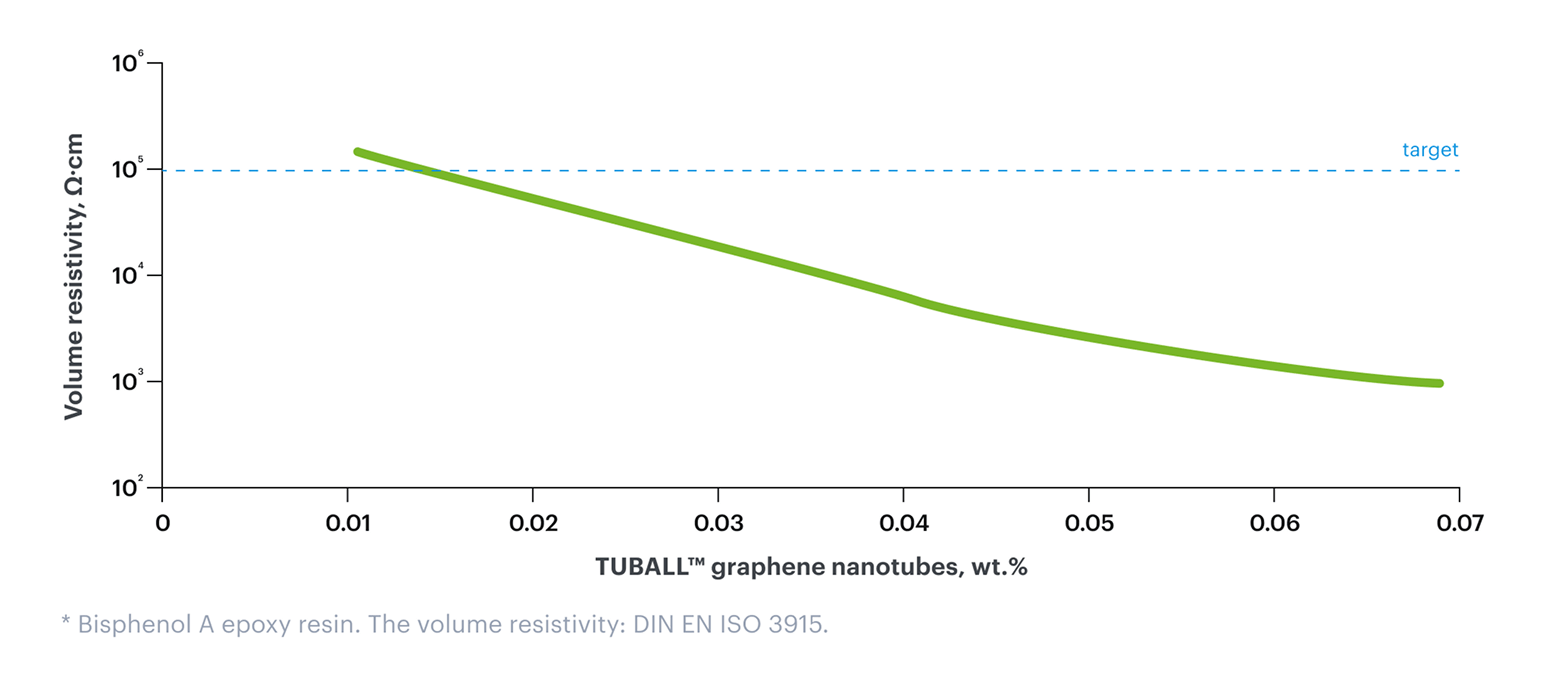

TUBALL™ graphene nanotubes create a 3D reinforcing conductive network inside composite material, maintaining and even improving pipe and tank mechanical properties, increasing their durability.
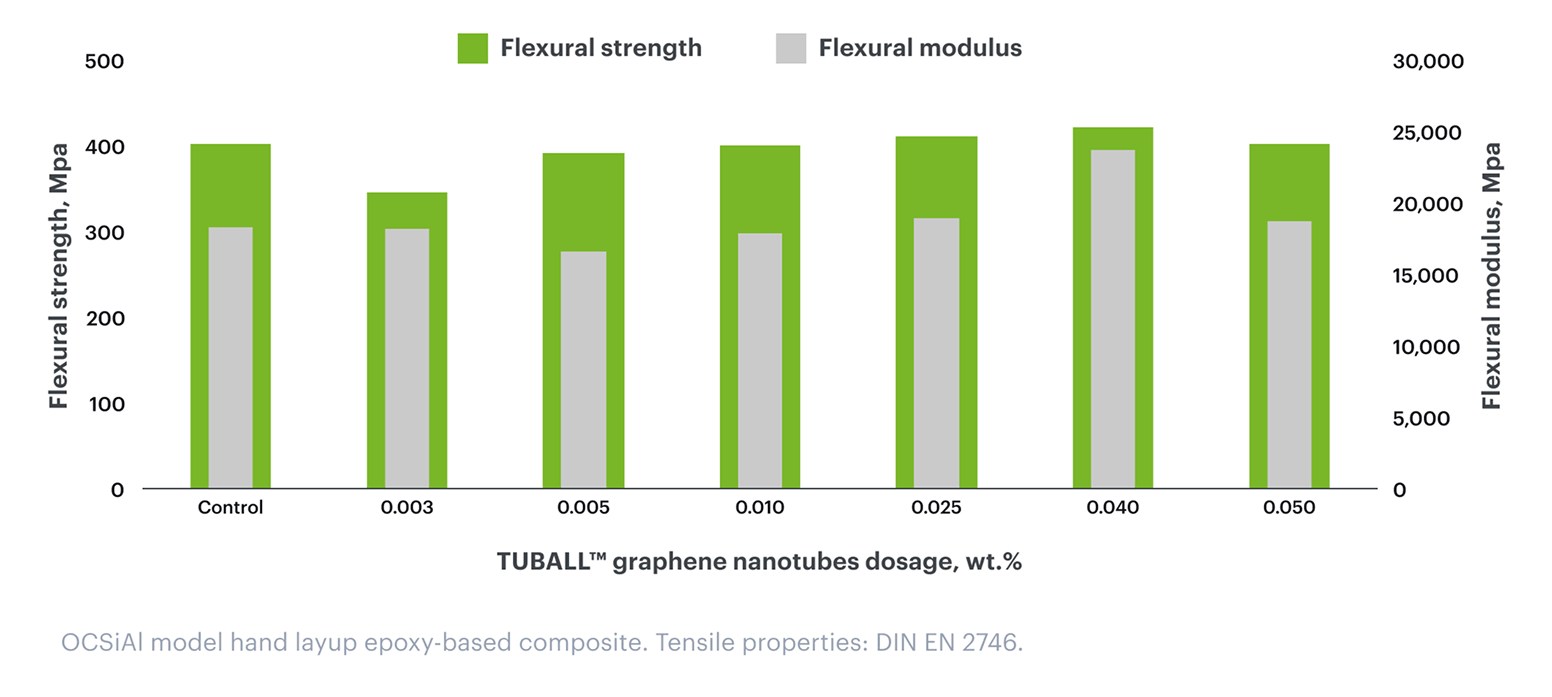
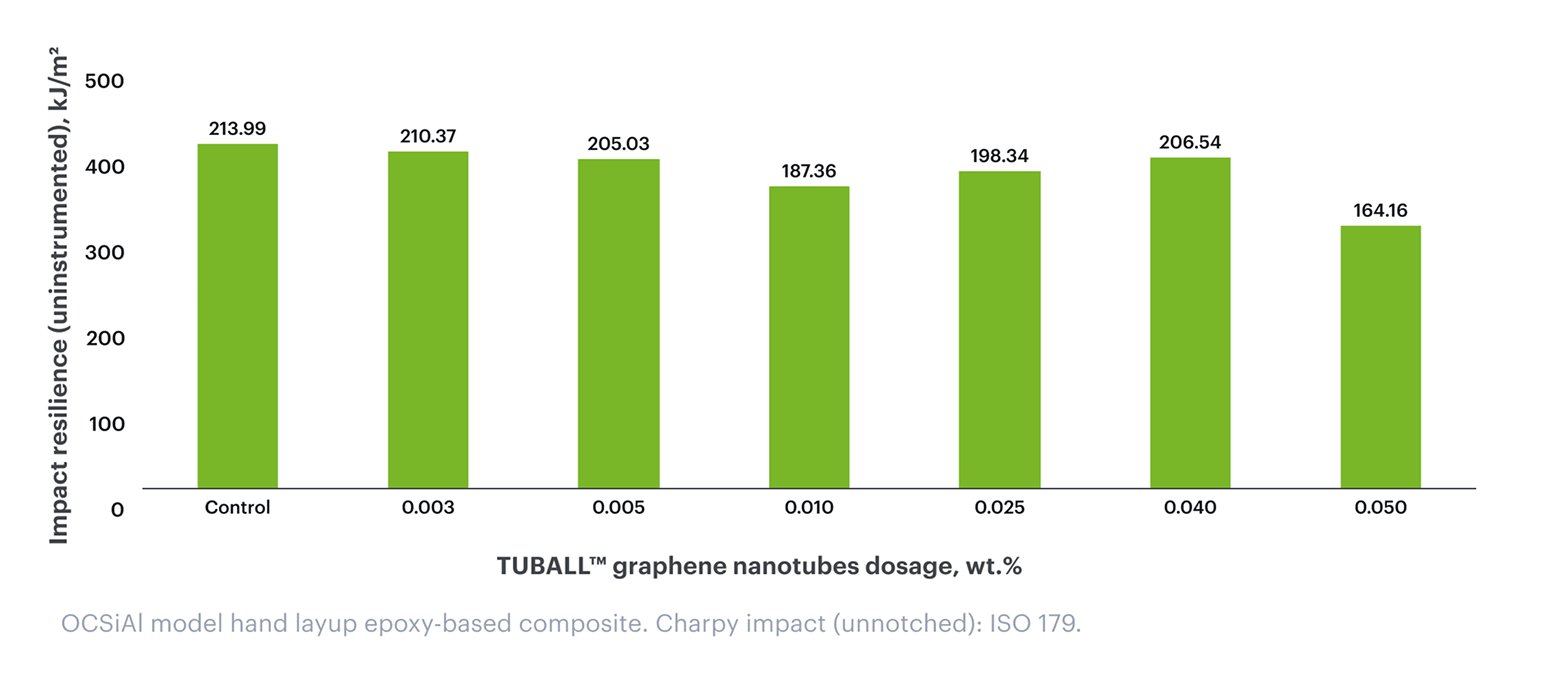
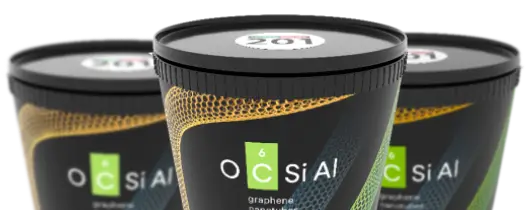




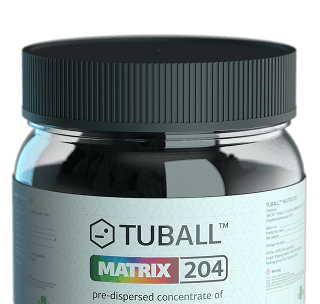
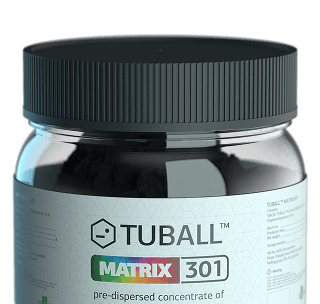
TUBALL™ MATRIX 204 and TUBALL™ MATRIX 301 are concentrates based on polymer-carriers and pre-dispersed TUBALL™ graphene nanotubes. They are specifically designed for epoxy, polyester, and vinyl-ester composites and coatings. Designed for easy implementation, the masterbatches can be seamlessly integrated into existing production lines, complying with key composite manufacturing technologies. Compared with carbon veils or rovings, this requires lower labor costs, allowing additional cost savings for producers.
Contact us for product processing guidelines and additional technical documentation




SWCNT-enhanced polymer, in which every monomer is decorated with a U-shaped fragment, exhibits significantly increased mechanical properties when compared to the matrix polymer.

It was shown that the electrical conductivity of SWCNT/epoxy composites increased by 7 orders of magnitude over that of epoxy resin when the content of SWCNTs was 0.005 wt%. The impact strength, tensile strength, and elastic modulus of the materials were increased by 47.9%, 58.9%, and 19.0%, respectively.

0.025 wt.% SWCNTs improved the Mode I fracture toughness, UTS, and elastic modulus of epoxy by about 182, 15, and 11%, respectively.

Applying an electric field during the curing of SWCNT/epoxy nanocomposites promotes the orientation and assembly of nanotubes into a more efficient conductive network, reducing electrical resistivity by up to one order of magnitude even at ultra-low loadings (0.01 wt%).

Loading SWCNTs into carbon black/polymer composites lowers the volume resistivity of such composites. The application of a small quantity of SWCNTs in carbon black/polymer composites allows reducing the carbon black content and improving the rheological and processing properties.